Simulation of a Large-Scale FCC Riser Using a Combination of MP-PIC and Four-Lump Oil-Cracking Kinetic Models
The MP-PIC method upon which Barracuda Virtual Reactor is based is used to simulate riser hydrodynamics of an FCC process
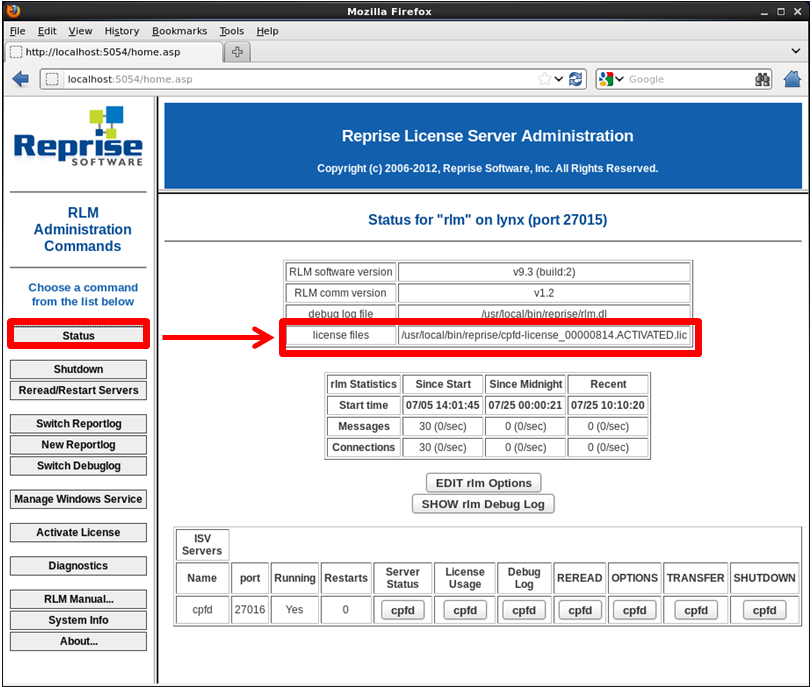
The RLM status page shows active licenses only. To view the RLM status page, open a web browser and point it to <license_server_hostname>:5054, where <license_server_hostname> is the hostname or IP…
CPFD Software researches how to make FCC processes more economically efficient, using Barracuda Virtual Reactor to identify and diagnose issues with emissions and with afterburn.
Before discussing default settings, let’s first consider the motivation behind the contact friction model. The Eulerian/Lagrangian formulation of the fluid/particle flow equations used by Barracuda is what allows it to…
This page contains links to instructions for the most common RLM License installation cases. If you need more information, please log into the CPFD Support Site and refer to the…
Kodam, Freireich, Pretz, and Stears from Dow discuss how Barracuda Virtual Reactor has been used to investigate riser termination device performance for separating catalyst particles from the gas phase.
Update – April 24, 2018 This version of Barracuda Virtual Reactor is no longer available for download. For the latest version of Virtual Reactor™, please visit the Dashboard. If you still…
This paper examines how CPFD simulation is used to improve overall FCCU economics.
Update – April 24, 2018 This version of Barracuda Virtual Reactor is no longer available for download. For the latest version of Virtual Reactor™, please visit the Dashboard. If you still…