Application Model: Proppant Transport in Hydraulic Fractures
Introduction Hydraulic fracturing has had a profound impact on the energy industry since its conception and adoption in the 1960s and the revolution of shale fracking. In the US alone,…
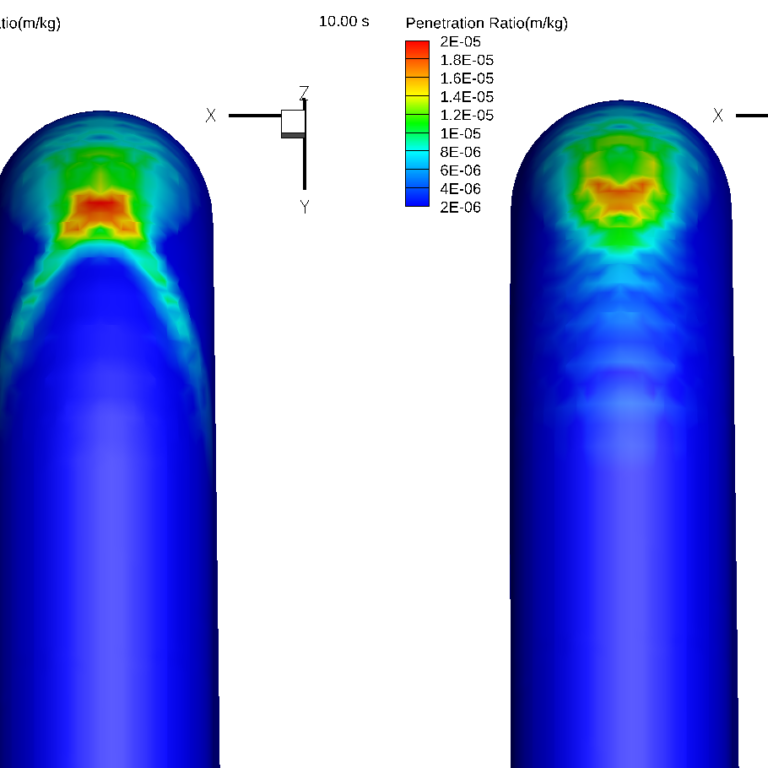
This application model uses Barracuda Virtual Reactor to simulate solid particle erosion in a 90-degree elbow, capturing particle-wall impacts and wear patterns under varying mass loadings. The simulation demonstrates how particle collisions influence erosion severity and distribution, enabling evaluation of component durability in particulate-laden flows.
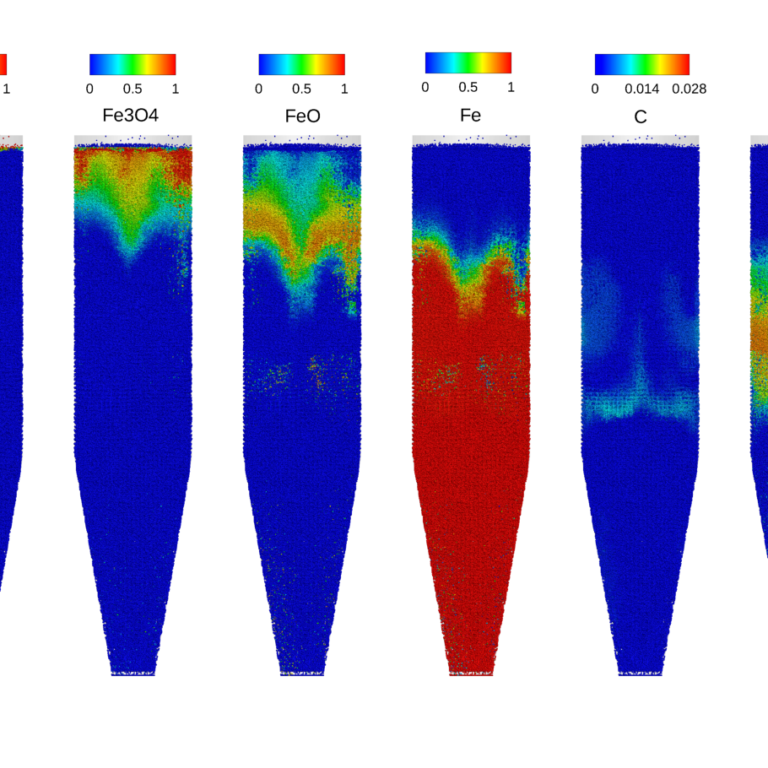
This application model uses Barracuda Virtual Reactor to simulate the direct reduction of iron ore in a MIDREX-style shaft furnace. The simulation tracks moving bed hydrodynamics and reduction reactions between iron oxide particles and a hydrogen–carbon monoxide gas mixture, enabling evaluation of solids conversion, gas species evolution, and furnace temperature profiles.
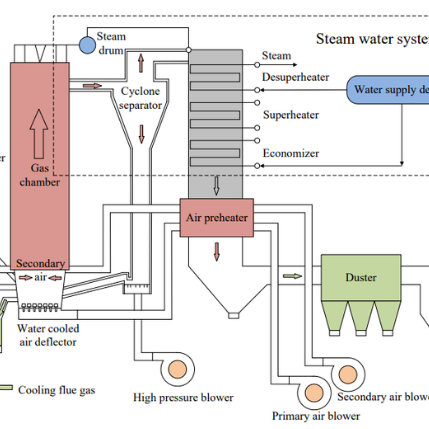
This application model uses Barracuda Virtual Reactor to simulate combustion inside the riser of a lab-scale CFB combustor. The simulation tracks fluid-particle interactions and chemical reactions between air and volatile species released from coal particles. This enables users to evaluate combustion performance, temperature profiles, and gas species distributions such as O₂, CO₂, NO, and SO₂ across the riser.
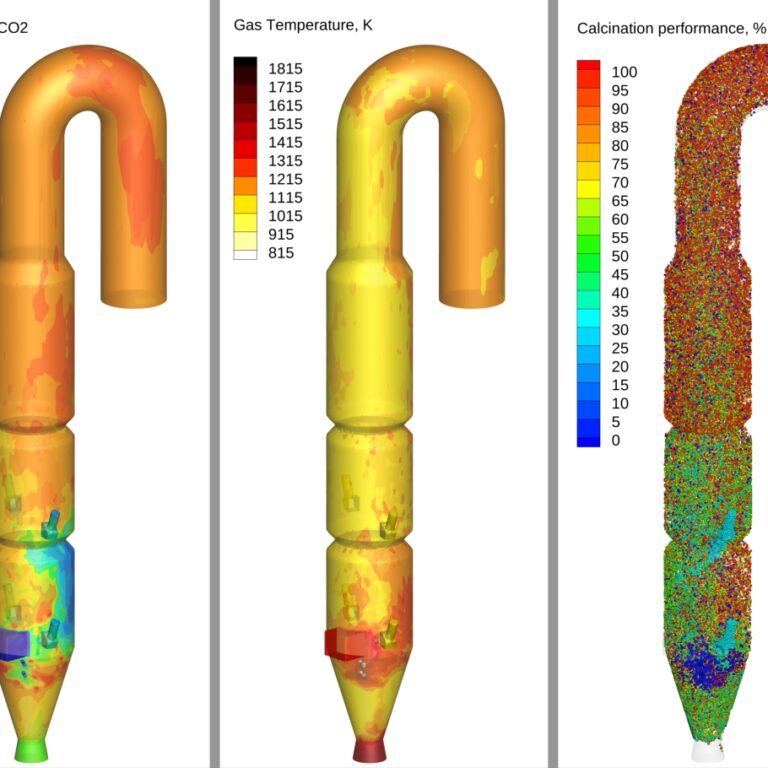
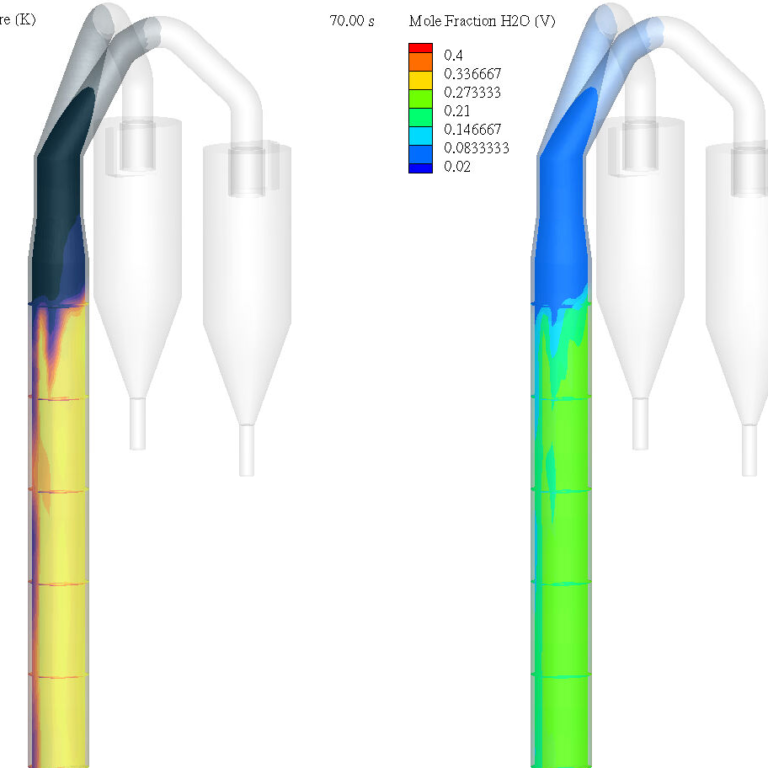
Introduction Figure 1: Cement Manufacturing Process (Courtesy of Aixprocess, Barracuda Users Conference 2019) Figure 2: Preheater Tower Flow Diagram (Courtesy of Aixprocess, Barracuda Users Conference 2019) Dating…
Introduction As global energy consumption continues to increase, the search for sustainable alternative energy technologies becomes increasingly important. Of the available options, bioenergy technologies like biodiesel fuels have garnered a…
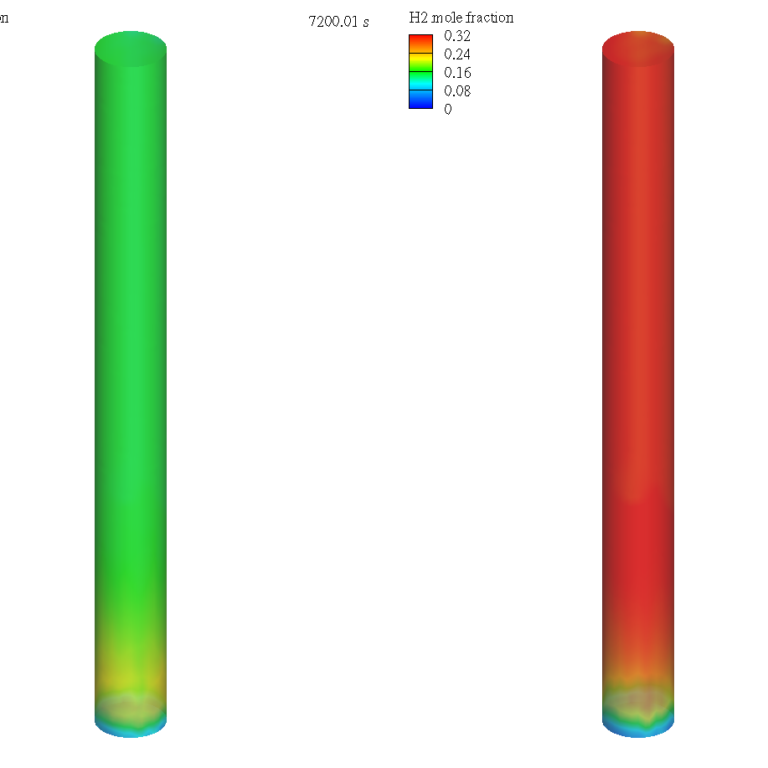
Introduction Dry reforming of methane (DRM) utilizes methane (CH4) and carbon dioxide (CO2), the two major sources of greenhouse gas (GHG) emissions and main components of biogas, to produce pure…
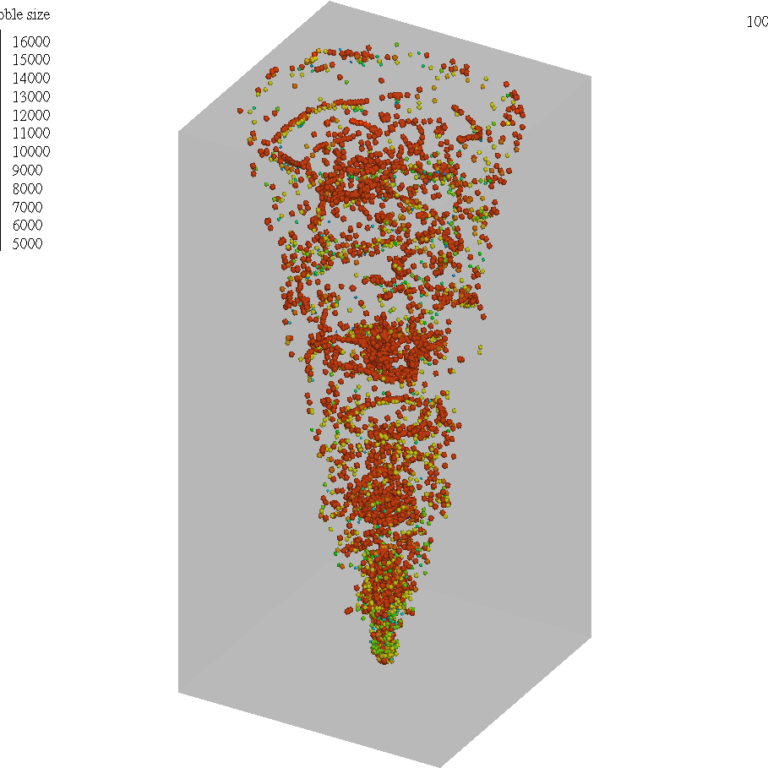
This application model uses Barracuda Virtual Reactor to simulate argon bubbles rising through molten iron in a laboratory-scale MMBCR. While chemical reactions are excluded in this study, the simulation captures detailed bubble behavior—tracking coalescence, breakup, and diameter evolution—as a foundation for modeling more complex reactive systems.
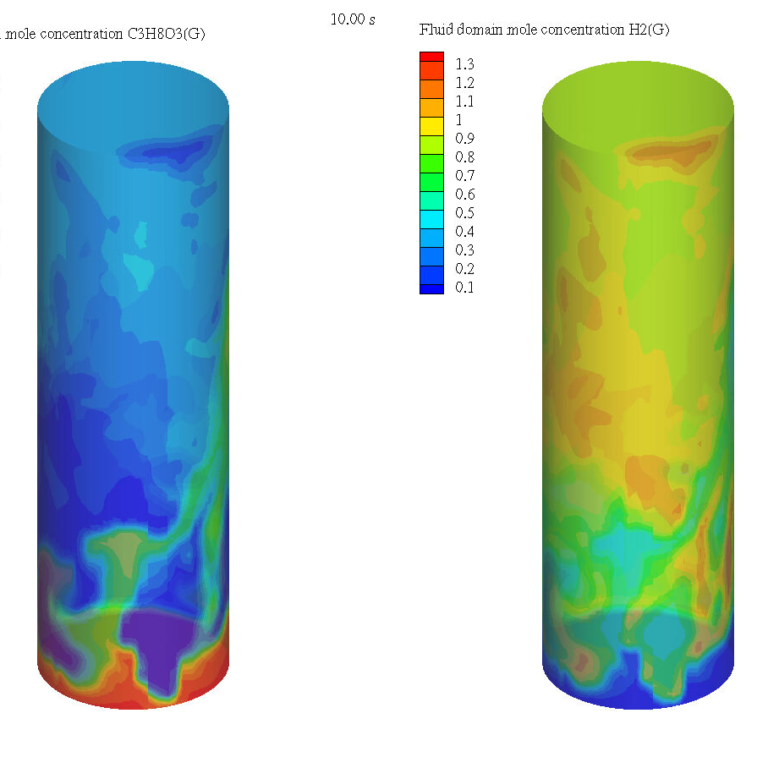
Introduction Fossil fuels usage accounts for 96% of the 60 million tons of hydrogen (H2) produced world wide (Al-Qahtani’ 2020). Currently steam methane reforming combined with carbon capture and storage…