
Application Model Overview
Fluid catalytic cracking (FCC) relies on rapid vaporization of liquid hydrocarbon feed as it contacts hot catalyst in the riser. Incomplete vaporization can reduce catalytic conversion, promote thermal cracking and coke formation, and cause liquid droplets to accumulate on riser walls. Understanding how feed composition, temperature, and injection conditions affect vaporization is therefore critical to efficient FCC operation.
This application model uses Barracuda Virtual Reactor to simulate the evaporation of multi-component FCC feed across an industrial-scale riser. By representing the feed as multiple hydrocarbon cuts with different boiling-point ranges, the model captures the changing behavior of light and heavy feed components as they interact with hot catalyst and steam. A feed specification tool based on API correlations is also provided to generate temperature-dependent material properties from boiling-point and feed characterization data.
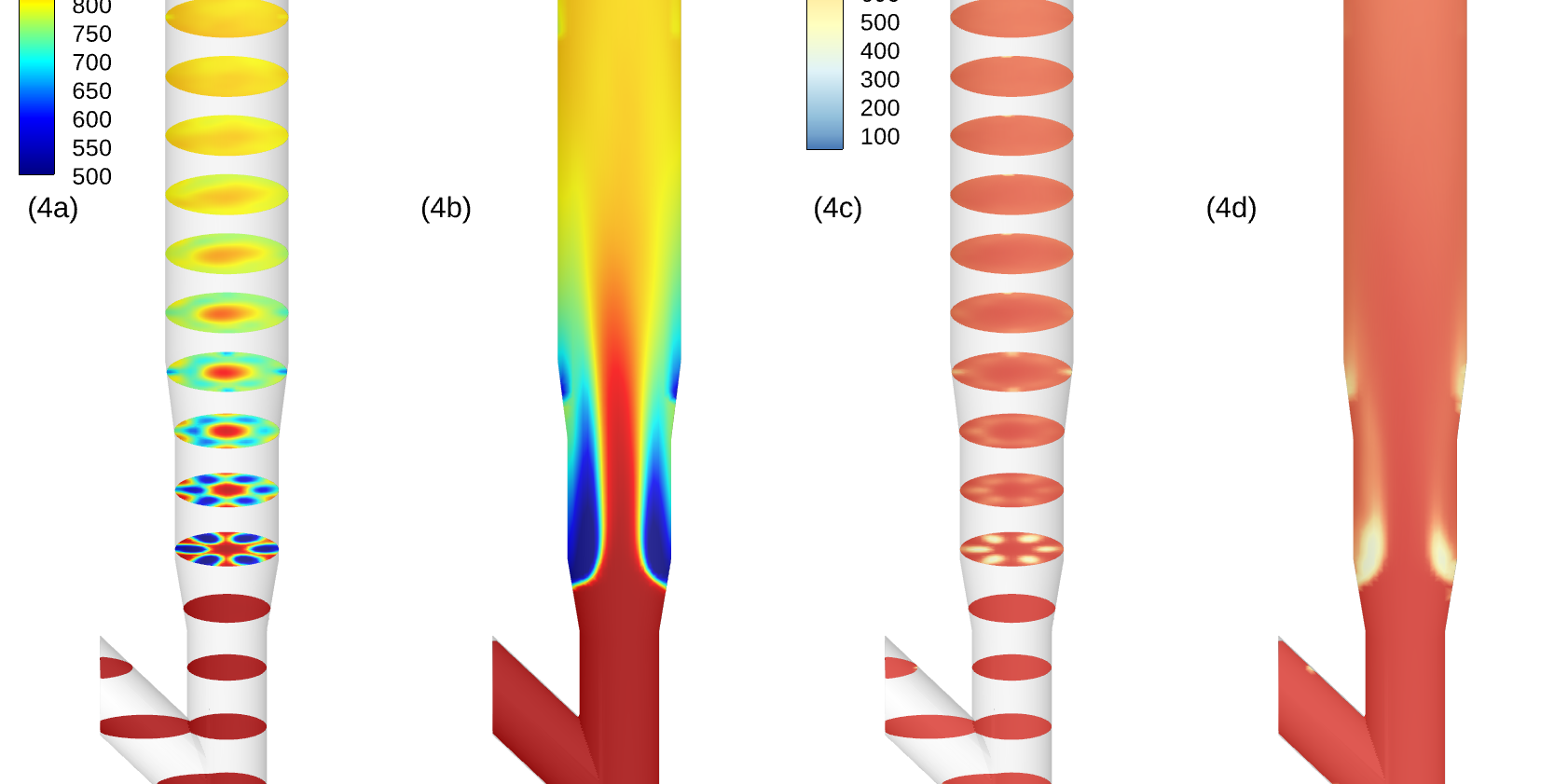
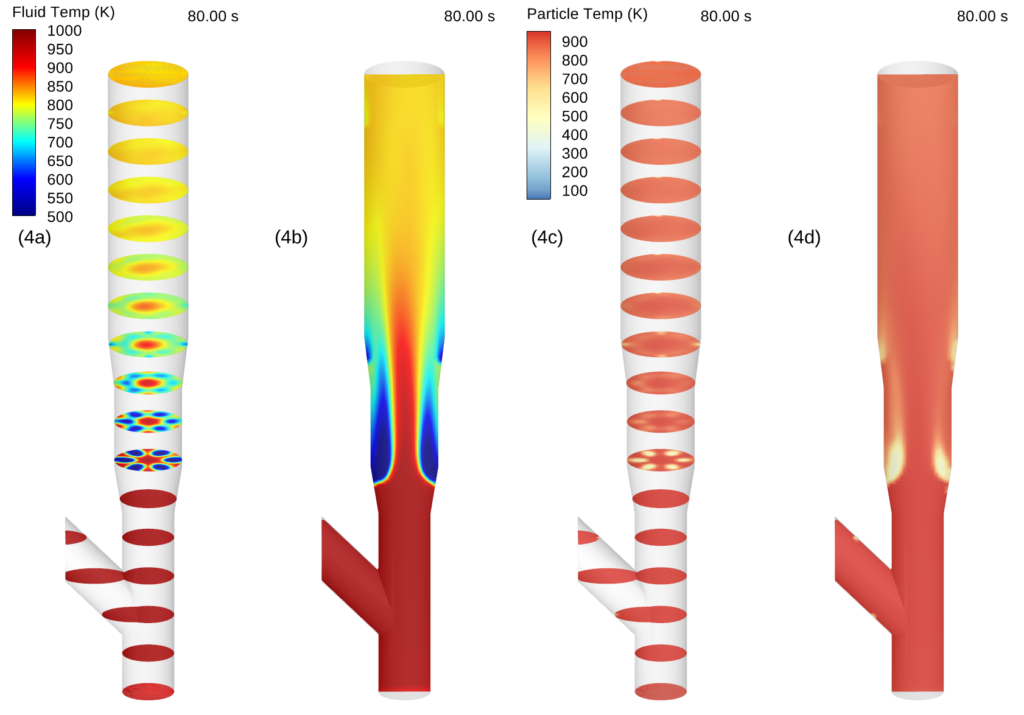
The simulation provides detailed insight into feed vaporization, temperature changes, droplet trajectories, and the transition from liquid to gas phase throughout the riser. Results show rapid vaporization of the lighter feed components, while heavier oil persists farther downstream and exhibits a greater tendency to travel along the riser walls. Barracuda can also identify regions susceptible to liquid accretion, providing engineers with a means to evaluate and optimize feed injection locations and operating conditions.
Additional Resources